I was in my 20s when I first encountered the popular sitcom, How I Met Your Mother. As a twenty-something desperate to graft the identity of a show into my being, me and my friends watched avidly, insistent upon the parallels between the friend group in the show and our own in reality. Many of the idioms and witticisms that peppered each episode made its way into our own vernacular: Big Fudge, Classic Schmosby, Legen-wait for it-dary, among a myriad of others too long to list. The show itself has aged somewhat gracefully (although there’s a lot of sexism and womanizing that is better left to the late 2000s), but there was always a line that stuck with me that I never got around to fully embracing or agreeing with.
New Is Always Better.
Now context, of course. The phrase is spoken by Barney, the show’s clear cut example of the type of person you DON’T want to be and should not emulate or imitate in any way whatsoever. But it should be stated quite clearly that even though he was meant to be this reprehensible foil to the chivalrous and romantic Ted, Barney often was the more lovable of the two, and thus was given more memorable lines for audiences to latch onto. Being played by the very charismatic Neil Patrick Harris only further leaned into this notion that, while on the surface, we should not say or do as Barney does, the mixed signal being sent was that Barney was awesome, much more fun, and so we should receive his messaging much more easily. I digress.
The point I’m driving at here is that something felt off about this phrase to me. Certainly corporate America and advertisers want us to believe this, but are new things actually better than old things? Or are we so easily swayed by recency bias and FOMO that what we are told we should want is a worse decision for us?
Let’s explore the history of what is known as Planned Obsolescence.
Planned Obsolescence
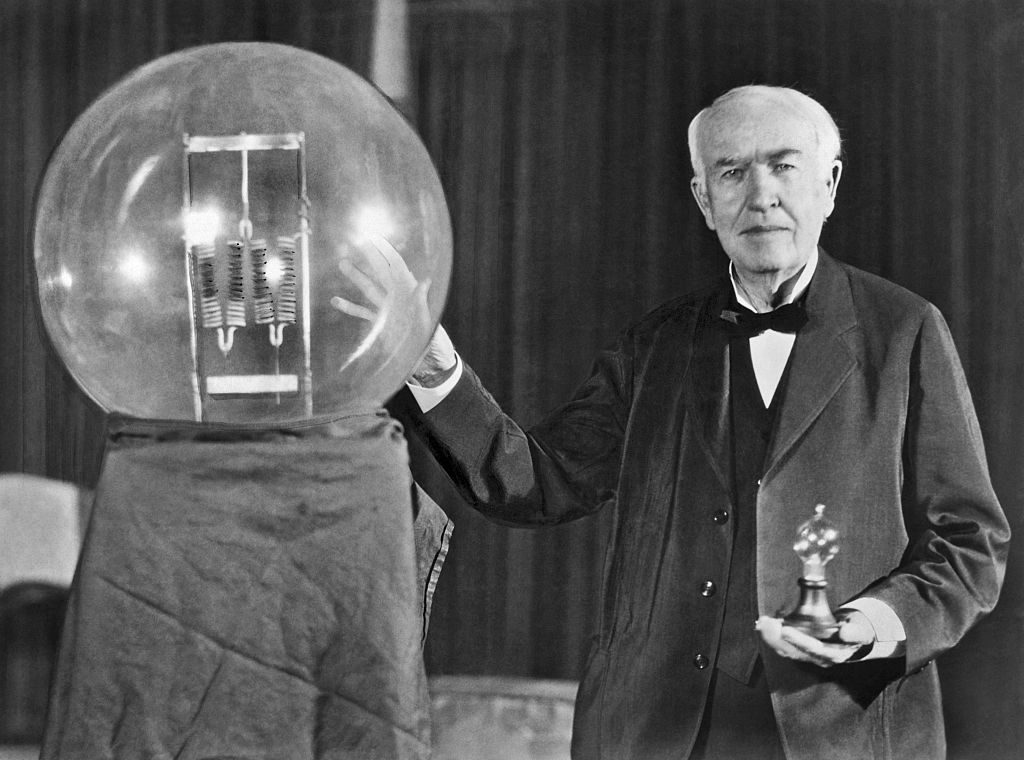
Thomas Edison first patented the incandescent light bulb in 1879. It was an engineering breakthrough that was a vast commercialized success that propelled society forward in a way difficult to describe. No longer would humanity be limited to activities during waking daylight hours. Our lives would no longer have to revolve around the sun. It paved the way for massive improvements in civilization as electricity given to the masses revolutionized the way that we all lived our lives.
The light bulb quickly improved over the next 50 years or so. By 1924, it had a burn time of 2500 hours or more. What a remarkably convenient invention for the working class!
However, things had improved too quickly for companies to innovate and keep up. The longer that light bulbs lasted, the lower the demand for them was. This created a financial problem for all of the companies manufacturing these products, and one that they colluded to snuff out.
In 1924, a group of the leading industry leaders in the market met in Geneva and decided to intentionally decrease the life span of the light bulb. This still took a remarkable feat of engineering as you had to not just make a worse product that didn’t work, but pinpoint the exact moment that a light bulb should burn out to keep your company reputable. That’s a lot of work to preserve profits!
This group’s collusion only lasted until the 1930s or so, but the principle of what they achieved was already enshrined:
It is acceptable to make a worse product as long as the majority of consumers aren’t the wiser, and it allows the company to still make money off of it.
This is the essence of Planned Obsolescence, what is also sometimes more vulgarly referred to as enshittification.
I think we all, for the most part, suspected that this has always been the case. Whether it’s Apple making older models of iPhones run more slowly through iOS updates, newer appliances seeming to break far more often, or car parts lasting just long enough to keep you coming to the shop, and hopefully bother you so much that you’ll decide to update with a newer version. The phrase “they don’t make them like they used to” is an evergreen phrase because with each passing generation, we get further and further from making things that are built to last.
This is the domino effect that we live with today as a result of that meeting in Geneva. Instead of a market designed to improve our lives in ways that are convenient and cost-effective, it instead seeks to undermine itself so that it can continue to treat itself to our hard earned money. It’s the exact reason why tech companies don’t put all of their best features into one device right away. They need something to sell for the next model!
Oh you don’t think they could’ve sold you a phone with a better camera and battery life ten years ago? Or maybe they were just stretching out the features so that you would feel like you shouldn’t settle for older products.
This has happened in a big way with the Internet and Social Media too. Google searches used to be reliable in that the top result was oftentimes the most relevant to what you were looking for. That was gradually made worse to favor results of ad partners and sponsored websites. And that has since been made even more terrible with the advent of Google’s Gemini AI that summarizes (correctly or incorrectly) the gist of what you are searching for, and lowering the analytical requirement of our amateur researchers.
Facebook, Instagram, Twitter (I will never call it X), TikTok all have shifted their algorithms’ priorities from “the most recent thing that someone you follow has posted” to “Hey, here are things that seem to align with your interests and browsing patterns that we scraped from your phone’s data. Won’t you please spend more time and money through us?” The result is an advertisement filled hellscape that no longer resembles what I signed up for, nor does it connect me to the people that I want to be connected with. It is all vastly worse than it used to be and there is a noticeable toll that it has taken on individuals and on society at large. There is more connectivity than ever before, and yet personal connections are at an all time low. That isn’t natural, and therefore it must be manufactured.
But if these decisions and changes are overall empirically worse for us, then why do this in the first place?
Privatization
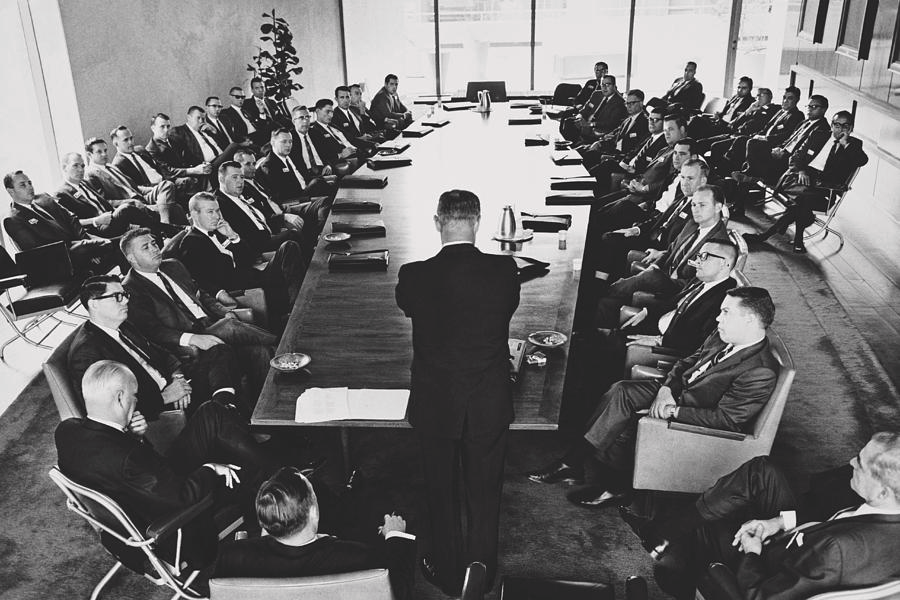
As oft happens with my posts (unintentionally I might add), we generally end up at the same place we usually do when we try to figure out the culprit of why things seem to be intentionally getting worse in society. It’s like in Scooby Doo whenever Fred and the gang would unmask the monster at the end of each episode. It didn’t matter how many twists and turns and misdirects the show took; you always knew that there was some old greedy white guy responsible for all the trouble. And perhaps, rather unsurprisingly, that too is the resolution in our case as well.
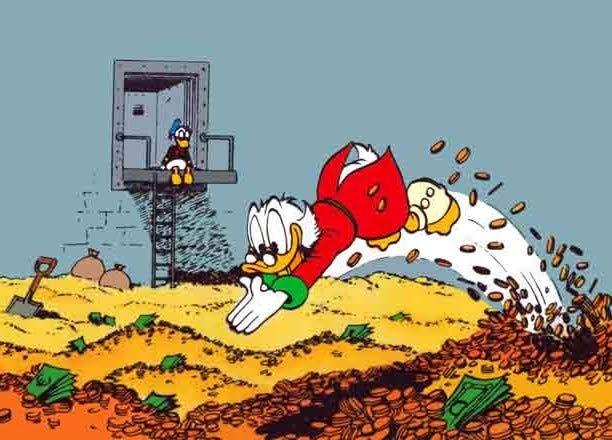
Greed is the discordant melody and unnatural rhythm that we must contort ourselves to because this dysfunctional reality has it installed as a default feature. Long gone are the days where products were made for consumers like you and me. In this stock market driven economy, there is one be-all and end-all king of capitalism. No, it’s not the CEO; it’s something far more nebulous and, dare I say, useless: the shareholders and private equity.
This single pivot in perceived value has caused literally every single service, product, necessity, luxury, and anything else you can buy and sell to suffer from a severely steep drop in efficiency, quality, and functionality.
The housing market? Bought up by private equity firms to flip and sell at a massive gain, keeping first time homebuyers out of the market and inflating the values of homes.
The entertainment industry? More and more, films and shows end up being sequels or remakes based on existing IPs because it is less of a financial risk to make something that people are already familiar with. It is a rarity these days to find an original show or movie that finds a cultural foothold, or even gets the green light to get made in the first place, and you can blame the fickle feelings of shareholders because of that.
Want to order a sports jersey from one of your favorite teams? A shame there’s really only one company, Fanatics, that has cornered the market, meaning they can charge exorbitant prices for absolutely shameful quality. I bought a soccer (or football depending on what country you’re reading from) jersey for Team USA during the World Cup, and within one wash the numbers and letters were already peeling off. When I attempted to contact customer support to voice my displeasure and receive some sort of compensation for the terrible quality despite spending over $100 on this item, I was told that because I washed it already they couldn’t take it back, but they could offer me a 25% refund since it was defective. I took the money, but I was angry at this anti-consumer practice and that whoever was on the other end of the script I was being read didn’t have my best interests in mind.
There are so many more examples just like this, and thankfully someone has taken the time to create a website tracking products and how they have gotten/are getting worse over time. It’s worth a follow if you care about where you spend your money.
Let’s take it a step further. Our current presidential administration has taken massive leaps to make sure that this type of business practice is enabled, getting rid of consumer protection regulations in the name of corporate profit. In addition to that, the extreme defunding of critical programs, namely the Department of Education and Medicare, has rendered them defunct and ineffective, putting tens of millions of our fellow citizens at risk.
But that’s kind of the point right? The greedy want us to feel broken and desperate. They want us uneducated. They want us to feel like we have no other choice. They want us to rely on someone to tell them what to do without thinking about if it’s right or fair to the rest of us. This is the reality we live in now. We are devoid of critical thought and instead default to the parroting of talking heads and pundits when we should be more accountable, to ourselves and to our leaders.
We cannot be dependent on someone to come and do the job for us. Why do you think there’s been such a big push for AI in practically every platform? If you become dependent on it for answers, then you no longer question its integrity or its motive. Vigilance is hard. Accountability is hard. For some of us, reading is hard! The deck is stacked, but we should not settle for less. We deserve so much more than what we are being given right now, and the road that we are on is unsustainable.
There is a serious problem in the world when companies prioritize profit over everything. We are often the ones who suffer the most in the name of making the magic money number go up. But there is only so much they can take before they sully the market they’re trying to wring dry. Life is impossibly expensive, and how we respond matters. Research your local districts about who’s running for office this November. Prioritize people who are looking to make life more affordable and rein in the corporations who pull Congress’ strings from behind the scenes.
Like the innovation of the light bulb, let’s illuminate these seedy spaces so that we can live our lives on our terms, not the way a group of rich men in a secret meeting say we have to.
Thanks so much for reading everyone. Sorry it’s been so long since my last post. Life, as it often does, gets in the way. My kids were home for the summer and so I spent a lot of time entertaining them, and then my wife unfortunately got into a car accident that lost us our family car for a month and a half. Everyone is thankfully okay, but there have been other priorities besides researching and writing this blog. And now that the school year has started for me as a teacher, I can’t guarantee that I’ll be able to have a consistent schedule with posting. Nevertheless, I’ll be pressing on, and if you can remain patient with me, there’s still plenty more to come.
You can follow this blog on Facebook and Tumblr as well as on WordPress/Jetpack. Reading, sharing, commenting makes a huge difference and means the world to me.
Until next time.
HOPE IS THE REBELLION